Deposit rules › Wear and tear vs damage
Normal Wear and Tear vs. Damage: What Landlords Can Deduct
Room-by-room examples
Wear and tear generally can't be charged. Damage generally can.
Walls and paint
Wear and tear Paint that has faded or dulled with age; light scuffs; a few small nail or thumbtack holes from hanging pictures
Damage Large holes or gouges; marker, crayon or ink; paint colors the tenant chose without permission; heavy smoke staining
Carpet
Wear and tear Matting and wear in walkways; light fading from sun; seams loosening with age
Damage Stains, burns, rips or holes; pet urine or odor; areas chewed or torn by pets
Hard floors
Wear and tear Light surface scratches and a dulled finish from foot traffic
Damage Deep gouges; water damage from spills or overflows the tenant caused; burns
Blinds and window coverings
Wear and tear Sun fading; worn or frayed cords
Damage Bent, broken or missing slats; cut or missing cords; missing blinds
Doors, locks and keys
Wear and tear Loose handles or hinges from regular use; worn finish
Damage Holes in doors; broken frames or jambs from forced entry; keys or remotes not returned
Windows and screens
Wear and tear Windows that stick with age; weathered screens
Damage Broken glass; torn, bent or missing screens
Kitchen
Wear and tear Worn or faded countertops and cabinet finish; aging appliances that wear out
Damage Burns or knife cuts in counters; broken shelves, drawers or appliance parts from misuse; grease buildup beyond normal cleaning
Bathroom
Wear and tear Worn grout or caulk; minor tub or sink finish wear; a toilet seat that loosened over time
Damage Cracked or broken tiles, sinks or toilets; drains clogged by misuse; missing fixtures
Cleanliness
Wear and tear Normal dust and light dirt after years of living
Damage Trash, food or belongings left behind; filth that takes far more than a normal turnover cleaning
Yard and exterior
Wear and tear Normal lawn wear; weathered paint or siding
Damage Junk or vehicles left behind; damage to fences or siding; yard neglect when the lease made the tenant responsible
Three rules that decide most disputes
1. Age matters. Paint, carpet and appliances wear out on their own. When a tenant damages something that was already old, many courts only allow the value it had left, not the cost of brand new. Keep the purchase or install date for big items.
2. Proof beats memory. A charge holds up when a signed move-in report and dated photos show the item was in good shape before. Without them it's your word against the tenant's.
3. Itemize everything. List each charge with the room, the problem and the cost, and attach receipts or estimates. Some states require it, and lump sums invite disputes.
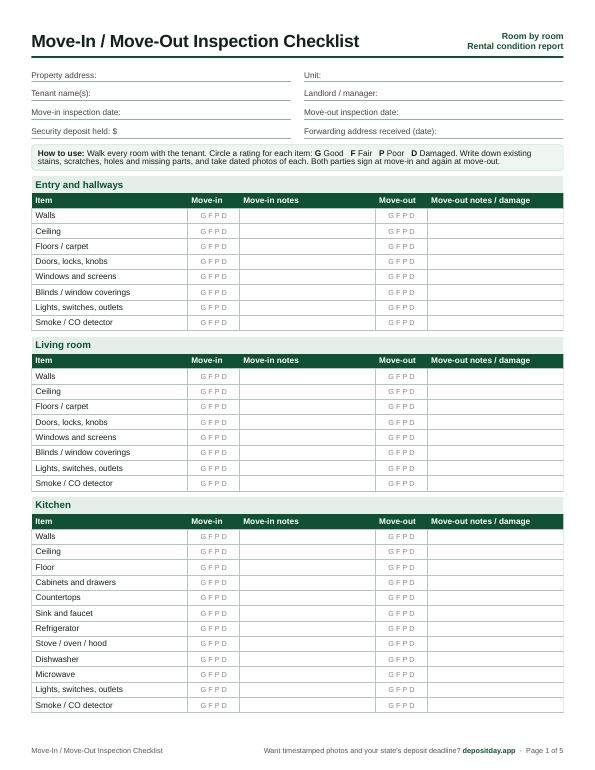
Room-by-room condition report: 12 rooms, 99 items, move-in and move-out columns, signature lines, and tips that win deposit disputes. Use it at move-in so the move-out comparison is easy. PDF, 5 pages, no sign-up.
Download the free PDF
Before you deduct
Check your state's deadline for returning the deposit or sending the itemized statement. It ranges from 14 to 60 days, and missing it can cost you the right to keep anything. Look up your state, then use the free deduction letter template.
DepositDay walks you through move-in and move-out room by room, burns the date and time into every photo, shows what changed side by side, counts down your state's deadline, and writes the itemized deduction letter.
Start a free inspection
Common questions
Can a landlord charge for nail holes?
A few small nail holes from hanging pictures are usually treated as normal wear and tear. Many large holes, anchors or holes from mounting a TV can count as damage.
Can a landlord charge for repainting?
Not just because the paint is old or faded. Repainting can be charged when the tenant damaged the walls or painted without permission, and many courts limit the charge based on how old the paint already was.
Can a landlord charge for carpet replacement?
Only for damage beyond normal wear, like stains, burns or pet damage. Because carpet wears out on its own, the charge is often limited to the value it had left. A carpet near the end of its life is worth little.
What is the difference between wear and tear and damage?
Normal wear and tear is the decline that happens from ordinary living over time. Damage is harm caused by accidents, abuse, neglect or pets beyond ordinary use. Landlords can generally deduct for damage, not for wear and tear.
General information, not legal advice. State and local rules differ and change. Read your state statute or ask a local attorney before you act. Deposit rules by state.