All states › Kansas
Kansas Security Deposit Return Deadline
The rule
| Deadline | 14 days after deductions are determined; 30 days at most |
|---|---|
| Maximum deposit | 1 month unfurnished, 1.5 furnished, plus up to 1/2 month for pets |
| Penalty for wrongful withholding | Amount due plus 1.5x the amount wrongfully withheld |
| Statute | K.S.A. § 58-2550 |
Kansas deadline calculator
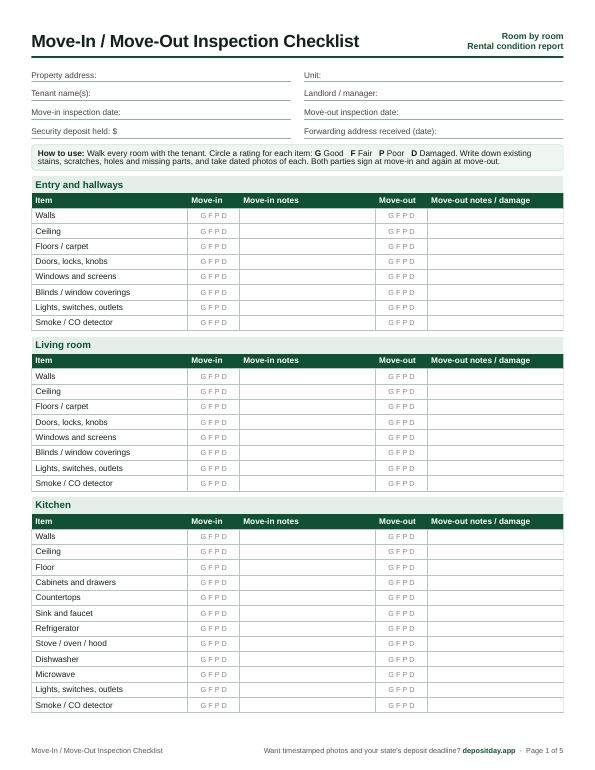
Room-by-room condition report: 12 rooms, 99 items, move-in and move-out columns, signature lines, and tips that win deposit disputes. Works for Kansas rentals. PDF, 5 pages, no sign-up.
Download the free PDF
What to send the tenant
Send the remaining deposit, or a written, itemized list of each deduction with its cost (free letter template), to the tenant's forwarding address before the deadline. Keep proof of the date you sent it. Normal wear and tear generally can't be deducted, and a deduction is strongest when your signed move-in report shows the item was in good condition.
DepositDay walks you through the move-in and move-out inspection with timestamped photos, counts down your Kansas deadline from move-out day, and writes the itemized deduction letter.
Start a free inspection
Common questions
How long does a landlord have to return a security deposit in Kansas?
Under K.S.A. § 58-2550, a Kansas landlord has 30 days to return the deposit or send an itemized statement of deductions. Details: 14 days after deductions are determined; 30 days at most.
What is the maximum security deposit in Kansas?
In Kansas, the security deposit limit is 1 month unfurnished, 1.5 furnished, plus up to 1/2 month for pets.
What happens if a Kansas landlord misses the deadline or withholds in bad faith?
The penalty in Kansas: amount due plus 1.5x the amount wrongfully withheld. Missing the deadline can also cost the landlord the right to keep any of the deposit.
Last reviewed November 2026. Summary of K.S.A. § 58-2550, cross-checked against multiple published sources. General information, not legal advice. Laws change, and cities and counties can add requirements. Read the statute or ask a local attorney before you act.