The formula
Refund = deposit + interest owed − unpaid rent − cleaning − damage − other lease charges. If the result is below zero, there's no refund and the difference is what the landlord may try to collect from the former tenant. Each deduction should appear as its own line on the itemized statement with an amount, not as one lump sum.
Example
A $1,500 deposit earned no interest. The tenant left one week of rent unpaid ($350), the oven needed cleaning beyond normal turnover ($75), and a door with a hole in it cost $180 to replace. Deductions total $605, so the refund is $895. If the landlord had also charged $400 to repaint a unit after a five-year tenancy, that line would likely fail: paint that old has little or no value left (painting charges).
What goes in each line
Unpaid rent. Rent due and unpaid through the end of the tenancy. If a tenant broke the lease, many states require the landlord to try to re-rent, which limits how much rent can be charged (breaking a lease). Prorate a partial month with the prorated rent calculator.
Cleaning. Only cleaning needed to return the unit to the condition it was in at move-in, apart from normal wear. Routine turnover cleaning of a unit left clean is often not chargeable (cleaning charges).
Damage. Damage beyond normal wear and tear, priced at a fair repair or replacement cost. For replacement, the charge should usually reflect the value the item had left, which is where the depreciation calculator comes in.
Other lease charges. Amounts the lease makes the tenant responsible for and that state law lets a landlord take from a deposit, such as a utility bill in the landlord's name or the cost of unreturned keys. A non-refundable fee is not a deposit deduction at all (non-refundable deposits).
Interest. Only some states and cities require it. Look yours up on deposit interest by state and estimate it with the interest calculator.
What can't be deducted
Normal wear and tear, in every state. Charges with no explanation. The full price of a new item to replace an old one near the end of its life. Costs from before the tenant moved in that the move-in report already recorded. And in many states, any deduction at all once the landlord misses the deadline for the refund or itemized statement. See what landlords can deduct for the full list.
Landlords: turn the numbers into the letter
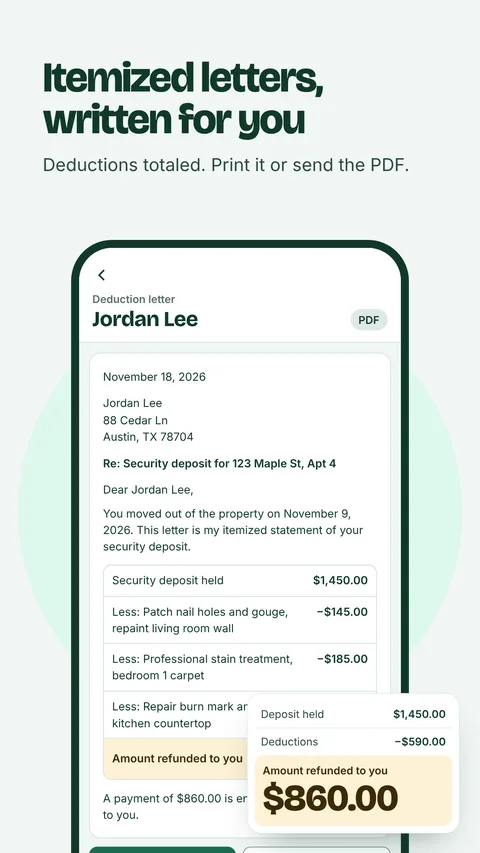
Each deduction you entered above becomes one line on the itemized statement, with a short description, the amount, and a receipt, invoice or estimate where you have one. Send it with any refund before your state's deadline, which runs from 14 to 60 days. The deduction letter template has the format, and the move-out inspection checklist keeps the damage list tied to the move-in report.
Renters: check the landlord's math
Add up the statement yourself. Look for lump sums, charges for normal wear, full replacement prices for old carpet or paint, and cleaning for a unit you left clean. If the refund is short or late, send a written demand that names the amount and your state's statute (free demand letter). If that fails, small claims court handles deposit cases without a lawyer, and many states add a penalty for deposits withheld in bad faith or returned late.
DepositDay puts the move-in and move-out photos side by side, flags what changed, counts down your state's deadline, and writes the itemized deduction letter for landlords or the demand letter for renters.
Start a free inspection
Common questions
How do I calculate how much of my security deposit I get back?
Start with the deposit, add any interest your state requires, then subtract each itemized deduction: unpaid rent, cleaning beyond normal turnover, damage beyond normal wear and tear, and other amounts the lease makes you responsible for. What's left is the refund.
What if the deductions are more than the deposit?
Then there's no refund and the landlord may bill the former tenant for the difference. The landlord still has to send the itemized statement by the state's deadline.
Can a landlord deduct for normal wear and tear?
No. Faded paint, light carpet wear and a few small nail holes are normal wear in every state. Only damage beyond that, unpaid rent and certain other lease charges can come out.
Do I get interest on my security deposit?
Only in some states and cities. Use the deposit interest calculator to estimate it, then enter it here.
How long does the landlord have to send my refund?
From 14 to 60 days depending on the state, and the clock may start at move-out or when you give a forwarding address. Pick your state above to see its rule.
Related guides
General information, not legal advice. State and local rules differ and change. Read your state statute or ask a local attorney before you act. Deposit rules by state.