Wear and tear vs. damage › Can a Landlord Charge for Painting
Can a Landlord Charge for Painting?
Wear and tear vs. damage on walls and paint
Generally can't be charged
Wear and tear Faded or dulled paint, light scuffs from furniture, minor marks near light switches, a few small nail holes from hanging pictures.
Generally can be charged
Damage Large holes or gouges, writing or crayon, heavy grease or smoke staining, water damage the tenant caused, walls painted a color the landlord didn't approve.
Why paint age matters
Interior paint is commonly treated as lasting about 3 to 5 years in a rental. Many landlords repaint between tenants anyway. If the walls were due for paint regardless, charging the tenant the full cost is hard to defend.
Example: a room cost $400 to paint and paint is expected to last 4 years. The tenant leaves heavy smoke stains after 3 years. One year of life was left, so a common way to figure the charge is $400 × 1 ÷ 4 = $100. Damage that needs extra work, like stain-blocking primer or patching holes, can usually be charged on top.
Touch-up vs. repainting the room
A few marks usually call for touch-up, not a full room. If a tenant fixed holes but the patches show, the landlord may charge to blend them. Keep the paint brand, color and finish on file. It makes touch-ups cheaper and the charge easier to prove.
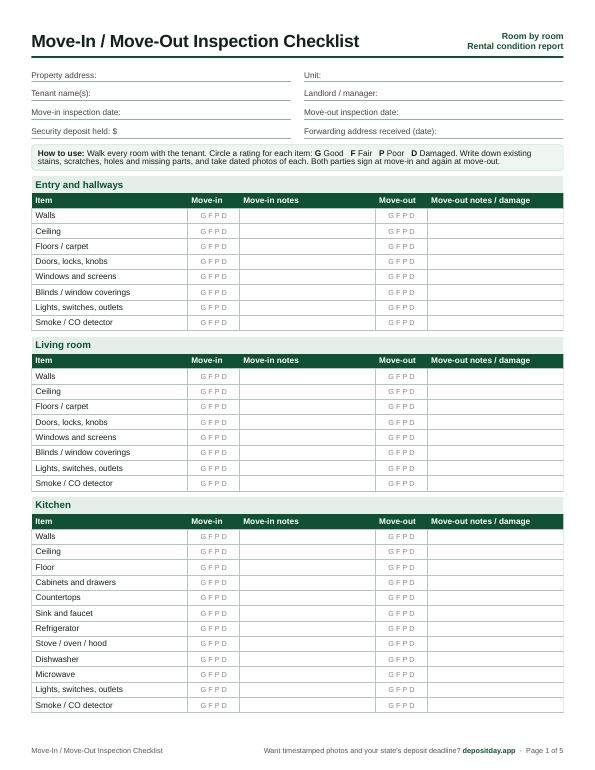
Room-by-room condition report: 12 rooms, 99 items, move-in and move-out columns, signature lines, and tips that win deposit disputes. Fill it in at move-in so the move-out comparison is easy. PDF, 5 pages, no sign-up.
Download the free PDF
Before anyone deducts
Every state sets a deadline for returning the deposit or sending an itemized list of deductions, from 14 to 60 days. Missing it can cost the landlord the right to keep anything. Look up your state. Landlords: use the free deduction letter template. Renters: see how to get your deposit back.
DepositDay walks you through move-in and move-out room by room, burns the date and time into every photo, shows what changed side by side, counts down your state's deadline, and writes the itemized deduction letter.
Start a free inspection
Common questions
Can a landlord charge for painting after 1 year?
Only for damage beyond normal wear. Light scuffs and fading after a year are usually wear and tear. Damage like large holes, crayon or an unapproved color can be charged, adjusted for the paint's age.
Can a landlord charge for painting after 5 years?
Usually very little, because interior paint is commonly treated as reaching the end of its life in about 3 to 5 years. Repairs to damaged walls may still be charged.
What if the tenant painted the walls a different color?
If the lease required permission and the tenant didn't get it, the landlord can usually charge to restore the original color, including primer if needed.
Can a landlord charge for smoke damage to paint?
Generally yes. Heavy nicotine staining and odor that require cleaning, sealing primer or repainting are treated as damage, not normal wear.
More deposit guides
General information, not legal advice. State and local rules differ and change. Read your state statute or ask a local attorney before you act. Deposit rules by state.
© 2026 DepositDay · App · Free checklist · Pinterest · About · Contact · Privacy