Wear and tear vs. damage › Can a Landlord Charge for Appliance Damage
Can a Landlord Charge for Appliance Damage?
Appliances: wear vs. damage
Generally can't be charged
Wear and tear A part that failed from age, like a worn door gasket, a burned-out heating element or a motor at the end of its life. Small scratches and dulled finishes from normal use. Problems the tenant reported during the tenancy that the landlord didn't fix.
Generally can be charged
Damage Cracked or missing shelves, drawers and door bins, a broken cooktop or oven door glass, dents, missing knobs or racks, damage from overloading or misuse, and an appliance left so dirty it needs more than a normal turnover cleaning.
Why appliance age matters
Every appliance has a limited life. If a ten-year-old dishwasher dies during a tenancy, that is usually age, not the tenant. When a tenant does damage an older appliance, many courts only allow the value it had left, not the price of a new one. Run the numbers with the depreciation calculator.
Repair first. Shelves, bins, knobs, racks and gaskets are sold as parts for most models. Charging for a whole new refrigerator when a part would do is easy to challenge.
Who pays for repairs during the tenancy?
In most places the landlord maintains the appliances the landlord supplies, unless the lease says otherwise. Tenants: report problems in writing as soon as they happen, so a breakdown isn't blamed on you at move-out. Landlords: keep the repair records, since they show what failed from age and what didn't.
Proving it
At move-in, photograph each appliance open and closed, inside and out, and write down the model, the age if known, and anything already broken. Do the same at move-out. On the itemized statement, name the appliance and the part, with the repair invoice or part cost.
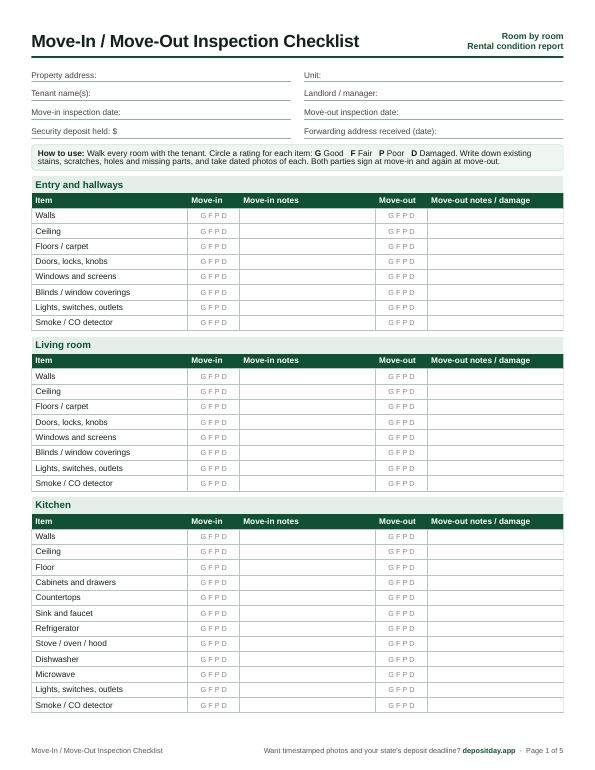
Room-by-room condition report: 12 rooms, 99 items, move-in and move-out columns, signature lines, and tips that win deposit disputes. Fill it in at move-in so the move-out comparison is easy. PDF, 5 pages, no sign-up.
Download the free PDF
Before anyone deducts
Every state sets a deadline for returning the deposit or sending an itemized list of deductions, from 14 to 60 days. Missing it can cost the landlord the right to keep anything. Look up your state. Landlords: use the free deduction letter template. Renters: see how to get your deposit back.
DepositDay walks you through move-in and move-out room by room, burns the date and time into every photo, shows what changed side by side, counts down your state's deadline, and writes the itemized deduction letter.
Start a free inspection
Common questions
Is a broken appliance normal wear and tear?
If it failed from age or normal use, yes. If the tenant broke it through misuse, neglect or an accident, it's generally damage the landlord can charge for.
Can a landlord charge for a new refrigerator?
Only if the tenant damaged it beyond repair, and even then the charge is usually limited to the value the old one had left. A fridge that died of old age is the landlord's cost.
Can a landlord charge for a dirty oven or fridge?
Generally yes, for cleaning that goes beyond a normal turnover, such as heavy grease or spoiled food left behind. See the move-out cleaning checklist.
What if I reported the appliance problem and it never got fixed?
A written report during the tenancy is strong evidence that the problem wasn't your damage. Keep a copy of the message and the date.
More deposit guides
General information, not legal advice. State and local rules differ and change. Read your state statute or ask a local attorney before you act. Deposit rules by state.
© 2026 DepositDay · App · Free checklist · Pinterest · About · Contact · Privacy