Wear and tear vs. damage › Can a Landlord Charge for Yard Damage
Can a Landlord Charge for Yard Damage?
Yard wear vs. damage
Generally can't be charged
Wear and tear Worn paths where people walk, thin grass under trees, plants lost to drought, freeze or storms, weathered fences and decks, and anything shown in the move-in photos.
Generally can be charged
Damage or neglect Holes and dead spots from a dog, tire ruts or oil stains from parking on the grass, broken fence boards or gates, removed or killed shrubs, trash and junk left outside, and an overgrown, unwatered yard when the lease put yard care on the tenant.
Start with the lease
Yard charges usually turn on who was responsible. In a single-family rental, leases often make the tenant mow, water and keep the yard free of trash, while the landlord handles trees, sprinkler repairs and major landscaping. In apartments and many duplexes, the landlord keeps the grounds. If the lease is silent, charging a tenant for a lawn that slowly browned is hard to justify. Note any local watering restrictions too: a tenant who followed a drought rule shouldn't be charged for the result.
What a fair yard charge looks like
Charge for the work actually needed to bring the yard back to its move-in condition, not to improve it. Mowing and weeding an overgrown yard, filling dog holes and reseeding or patching sod in the damaged spots, hauling away debris, or replacing a broken fence section are reasonable. Re-sodding a whole lawn that was patchy at move-in, or new landscaping, is an improvement. Keep the invoice or a record of hours and rate, the same way you would for cleaning.
Pets and yards
Dug-up beds, holes along the fence line and urine spots killing the grass are common pet charges, even when the lease allowed the pet. A pet deposit, if any, usually applies first (pet damage charges). Filling holes and reseeding the affected areas is usually a fair charge. Replacing the whole lawn usually isn't.
Proving it
Most yard disputes come down to photos. Take wide shots of the front and back yard, the fence line, side yards and the driveway at move-in and again at move-out, in the same season if you can, since a lawn looks very different in July than in January. The pre-move-out inspection is a good time for the landlord to point out yard work the tenant can do before leaving. Items left in the yard follow the same rules as anything else left behind after move-out.
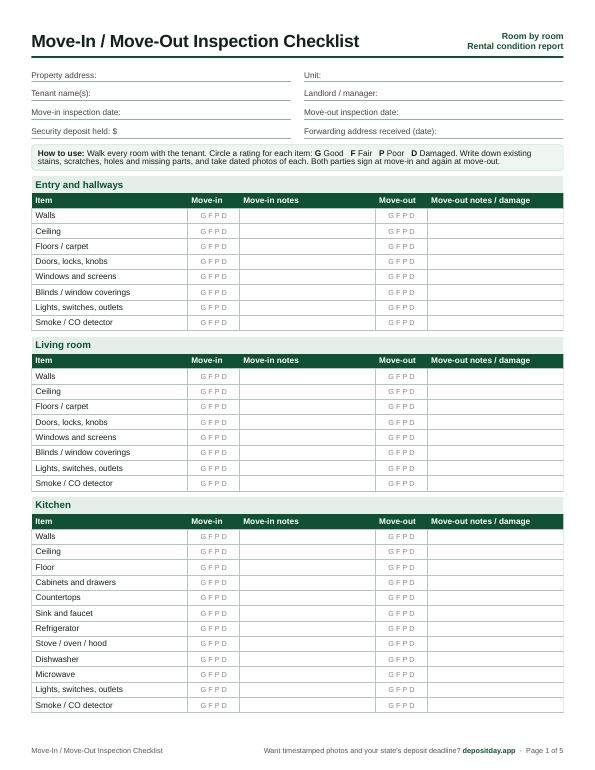
Room-by-room condition report: 12 rooms, 99 items, move-in and move-out columns, signature lines, and tips that win deposit disputes. Fill it in at move-in so the move-out comparison is easy. PDF, 5 pages, no sign-up.
Download the free PDF
Before anyone deducts
Every state sets a deadline for returning the deposit or sending an itemized list of deductions, from 14 to 60 days. Missing it can cost the landlord the right to keep anything. Look up your state. Landlords: use the free deduction letter template. Renters: see how to get your deposit back.
DepositDay walks you through move-in and move-out room by room, burns the date and time into every photo, shows what changed side by side, counts down your state's deadline, and writes the itemized deduction letter.
Start a free inspection
Common questions
Can a landlord charge for a dead lawn?
Only if the tenant was responsible for watering and caring for the lawn under the lease and neglected it, or caused the damage. Drought, freeze, shade and watering restrictions are not the tenant's fault.
Who is responsible for yard maintenance in a rental?
Whoever the lease says. Single-family leases often put mowing, watering and trash pickup on the tenant, with the landlord keeping trees, sprinklers and major landscaping. In apartments, the landlord usually keeps the grounds.
Can a landlord charge for holes my dog dug in the yard?
Generally yes. Filling the holes and reseeding or patching the damaged areas is a fair charge. Replacing an entire lawn that was already patchy is not.
How much can a landlord charge for yard cleanup?
A reasonable cost for the work actually done, backed by an invoice or a record of hours and rate. The goal is the yard's move-in condition, not an upgrade.
More deposit guides
General information, not legal advice. State and local rules differ and change. Read your state statute or ask a local attorney before you act. Deposit rules by state.
© 2026 DepositDay · App · Free checklist · Pinterest · About · Contact · Privacy