Wear and tear vs. damage › Can a Landlord Charge for Pet Damage
Can a Landlord Charge for Pet Damage?
Pet wear vs. pet damage
Generally can't be charged
Wear and tear Light hair and normal cleaning, slight matting where a pet walked, minor surface scratches on floors from normal use.
Generally can be charged
Damage Urine stains and odor in carpet or pad, chewed baseboards, trim, doors or blinds, deep scratches on doors and floors, torn screens, holes dug in the yard, waste left behind, flea treatment when the lease requires it (see pest control charges).
Pet deposit, pet fee and pet rent
Pet deposit: refundable money held for pet damage. Some states count it toward the overall deposit cap. Pet fee: a one-time charge that some states allow as non-refundable and others treat as part of the deposit. Pet rent: a monthly charge for having the pet, not a deposit. Check your state's rules and the lease to see which one applies. More on non-refundable deposits vs. fees.
Service and assistance animals
Under the federal Fair Housing Act, service animals and emotional support animals are not pets. Landlords generally can't charge pet deposits, pet fees or pet rent for them. A tenant is still responsible for actual damage the animal causes, which can come out of the regular security deposit.
Proving it
Dated move-in photos of carpet, doors and trim, and close-ups of the damage at move-out. For carpet, note its age (see carpet replacement). Itemize each repair with a receipt or estimate.
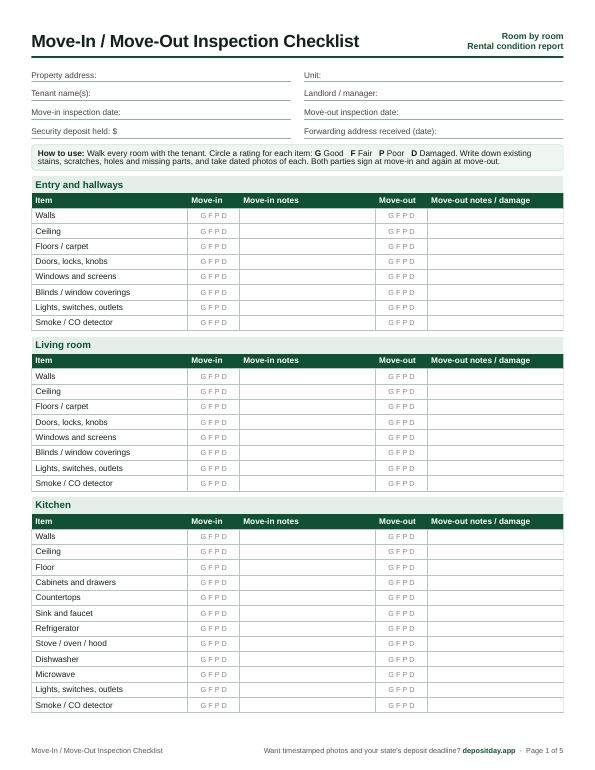
Room-by-room condition report: 12 rooms, 99 items, move-in and move-out columns, signature lines, and tips that win deposit disputes. Fill it in at move-in so the move-out comparison is easy. PDF, 5 pages, no sign-up.
Download the free PDF
Before anyone deducts
Every state sets a deadline for returning the deposit or sending an itemized list of deductions, from 14 to 60 days. Missing it can cost the landlord the right to keep anything. Look up your state. Landlords: use the free deduction letter template. Renters: see how to get your deposit back.
DepositDay walks you through move-in and move-out room by room, burns the date and time into every photo, shows what changed side by side, counts down your state's deadline, and writes the itemized deduction letter.
Start a free inspection
Common questions
Can a landlord charge for pet damage beyond the pet deposit?
Generally yes. If damage costs more than the pet deposit, the rest can come from the regular security deposit, and the landlord can sue for anything above that.
Is a non-refundable pet fee legal?
It depends on the state. Some allow a non-refundable pet fee if the lease says so clearly, and others treat any such fee as a refundable deposit.
Can a landlord charge a pet deposit for an emotional support animal?
Generally no. Under the Fair Housing Act, assistance animals aren't pets, so pet deposits and fees don't apply. Tenants are still responsible for actual damage.
Is pet urine on carpet normal wear and tear?
No. Urine stains and odor are generally treated as damage. The charge may still be limited by the carpet's age.
More deposit guides
General information, not legal advice. State and local rules differ and change. Read your state statute or ask a local attorney before you act. Deposit rules by state.
© 2026 DepositDay · App · Free checklist · Pinterest · About · Contact · Privacy