Wear and tear vs. damage › Can a Landlord Charge for Mold
Can a Landlord Charge for Mold?
Who usually pays
Landlord Roof or plumbing leaks, failed seals, broken exhaust fans, chronic dampness from the building itself, mold that was there at move-in.
Tenant Moisture the tenant caused or ignored: an unreported leak that spread, standing water, a blocked vent, or damp items left to rot. Many leases require tenants to report leaks promptly.
Report it in writing
Renters: report leaks and mold as soon as you see them, by text or email, with photos. The same goes for any leak (water damage charges). That record shows the landlord knew, and protects your deposit. Landlords: respond and repair promptly, and keep the work orders.
What a fair charge looks like
Cleanup or repair limited to the damage the tenant caused, with an invoice. Not a full renovation of an area that was failing anyway. If mold is a health concern, local housing codes may set extra rules and deadlines for the landlord.
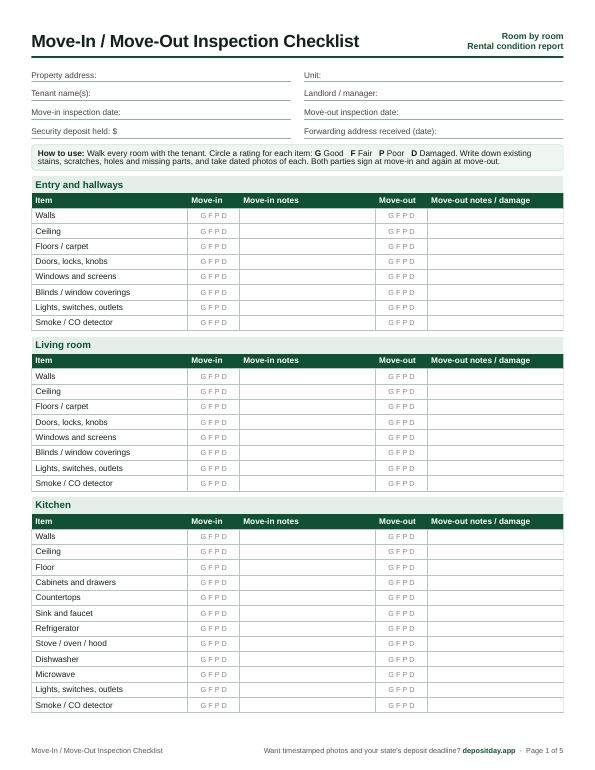
Room-by-room condition report: 12 rooms, 99 items, move-in and move-out columns, signature lines, and tips that win deposit disputes. Fill it in at move-in so the move-out comparison is easy. PDF, 5 pages, no sign-up.
Download the free PDF
Before anyone deducts
Every state sets a deadline for returning the deposit or sending an itemized list of deductions, from 14 to 60 days. Missing it can cost the landlord the right to keep anything. Look up your state. Landlords: use the free deduction letter template. Renters: see how to get your deposit back.
DepositDay walks you through move-in and move-out room by room, burns the date and time into every photo, shows what changed side by side, counts down your state's deadline, and writes the itemized deduction letter.
Start a free inspection
Common questions
Is mold the landlord's or tenant's responsibility?
Mold from leaks, roof or plumbing problems or building ventilation is usually the landlord's. Mold from moisture the tenant caused or failed to report can be the tenant's.
Can a landlord keep my deposit for mold in the bathroom?
Light surface mildew from normal showers is often treated as cleaning. Heavy mold from a blocked fan the tenant ignored, or an unreported leak, may be charged. A broken fan or leak the landlord didn't fix is usually on the landlord.
How do I protect my deposit from a mold charge?
Report leaks and mold in writing right away with photos, keep the bathroom fan running, and take dated move-out photos.
Does a landlord have to fix mold?
Generally, landlords must keep a rental fit to live in, and many local housing codes cover mold and the leaks that cause it. Report it in writing and keep a copy.
More deposit guides
General information, not legal advice. State and local rules differ and change. Read your state statute or ask a local attorney before you act. Deposit rules by state.
© 2026 DepositDay · App · Free checklist · Pinterest · About · Contact · Privacy