Wear and tear vs. damage › Can a Landlord Charge for Smoke Damage
Can a Landlord Charge for Smoke Damage?
Smoke: wear vs. damage
Generally can't be charged
Wear and tear Paint that is simply old or faded, light dust on vents, a faint odor that a normal turnover cleaning removes, and anything the move-in report shows was already there.
Generally can be charged
Damage Yellow or brown residue on walls, ceilings and trim, odor that stays after regular cleaning, burns in carpet, counters or furniture, stained blinds and light fixtures, and residue in HVAC vents or filters that needs extra cleaning.
Does the lease matter?
Yes. If the lease bans smoking and the tenant smoked anyway, the landlord's case is stronger, because the cleanup comes from a lease breach. Even when smoking was allowed, damage beyond normal wear can usually still be charged. A no-smoking clause doesn't let a landlord charge more than the real cost of the cleanup.
What a fair smoke charge looks like
Charge for the steps the unit actually needed: washing walls, a stain-blocking primer before paint, deep cleaning or replacing carpet that holds odor, cleaning blinds and fixtures, and duct or vent cleaning when residue is there. Paint and carpet wear out on their own, so the charge for repainting or new carpet is often limited to the value they had left. Run the numbers with the depreciation calculator, and see painting and carpet charges.
Proving it
Odor is hard to photograph, so write it down. At move-out, note which rooms smell and photograph residue up close: wipe a white cloth or cotton swab across the wall and photograph the stain next to an unwiped spot. Keep receipts or written estimates for cleaning, primer and paint. A signed move-in report showing clean walls and no odor is the best evidence either side can have.
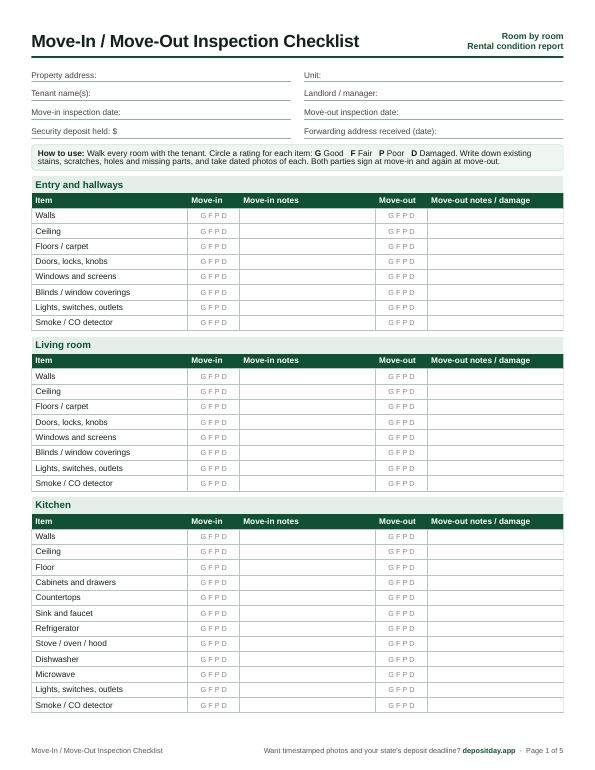
Room-by-room condition report: 12 rooms, 99 items, move-in and move-out columns, signature lines, and tips that win deposit disputes. Fill it in at move-in so the move-out comparison is easy. PDF, 5 pages, no sign-up.
Download the free PDF
Before anyone deducts
Every state sets a deadline for returning the deposit or sending an itemized list of deductions, from 14 to 60 days. Missing it can cost the landlord the right to keep anything. Look up your state. Landlords: use the free deduction letter template. Renters: see how to get your deposit back.
DepositDay walks you through move-in and move-out room by room, burns the date and time into every photo, shows what changed side by side, counts down your state's deadline, and writes the itemized deduction letter.
Start a free inspection
Common questions
Is cigarette smoke damage normal wear and tear?
Usually not. Heavy residue, staining and lasting odor are generally treated as damage. Old or faded paint by itself is wear and tear.
Can a landlord charge to repaint because of smoke?
Generally yes, when residue needs sealing primer and paint to cover. The charge is often reduced for the paint's age, since interior paint wears out on its own in a few years.
Can a landlord charge for smoke odor in carpet?
Generally yes, for cleaning or odor treatment that goes beyond a normal turnover. Replacement is harder to justify unless cleaning fails, and it is usually limited by the carpet's age.
What if the lease allowed smoking?
The landlord can usually still charge for damage beyond normal wear, like heavy residue or burns. A smoking ban makes the case stronger, but either way the charge should match the actual cleanup cost.
More deposit guides
General information, not legal advice. State and local rules differ and change. Read your state statute or ask a local attorney before you act. Deposit rules by state.
© 2026 DepositDay · App · Free checklist · Pinterest · About · Contact · Privacy