Wear and tear vs. damage › Can a Landlord Charge for Water Damage
Can a Landlord Charge for Water Damage?
Who usually pays
Usually the landlord
Building or wear Roof and window leaks, pipes that burst or corrode, a water heater or supply line that fails from age, sewer backups from the main line, storm or flood water, and stains that were there at move-in.
Often the tenant
Tenant-caused An overflowing sink, tub or toilet the tenant caused, water splashed out of the shower over time, a washer or dishwasher the tenant installed badly, an aquarium or plant leak, a window left open in the rain, pipes that froze because the tenant turned the heat off against the lease, and a small leak the tenant saw and ignored until it spread.
The reporting question
Many water disputes turn on when the landlord found out. A drip under the sink that's reported the day it starts is a repair. The same drip ignored for months can become rotted cabinets, warped flooring and mold. Many leases require tenants to report leaks promptly. Renters: report any leak in writing, by text or email, with a photo and the date, and keep a copy. Landlords: respond fast and keep the work order, because a slow repair can shift the cost back to you.
What a fair water damage charge looks like
Charge for repairing what the tenant's water actually damaged: drying out and patching a section of drywall, refinishing or replacing the boards that warped, replacing a swollen vanity base. Not a full remodel of a bathroom that was already worn. For older finishes, the tenant generally pays only the remaining useful life, not the cost of brand-new material. The depreciation calculator does that math. Keep the invoice and before-and-after photos, and list each repair on the itemized deduction letter.
Insurance and the deposit
Large water losses, like a flooded unit or damage to the unit below, often go through insurance instead of the deposit. The landlord's property policy usually covers the building. A tenant's renters policy may cover their own belongings and, depending on the policy, liability for damage they caused. If the landlord's insurer pays for a repair, check with the insurer before also charging the deposit for the same work. A deposit charge is still limited to the actual cost of damage the tenant caused.
Proving it either way
At move-in, photograph ceilings, under every sink, around toilets and tubs, the base of the water heater and the floor in front of the dishwasher and washer. Water stains look the same whether they're one month or ten years old, so a dated move-in photo is often the only way to show a stain was already there. At move-out, take the same shots. Floors warped by water are covered in more detail on floor damage charges.
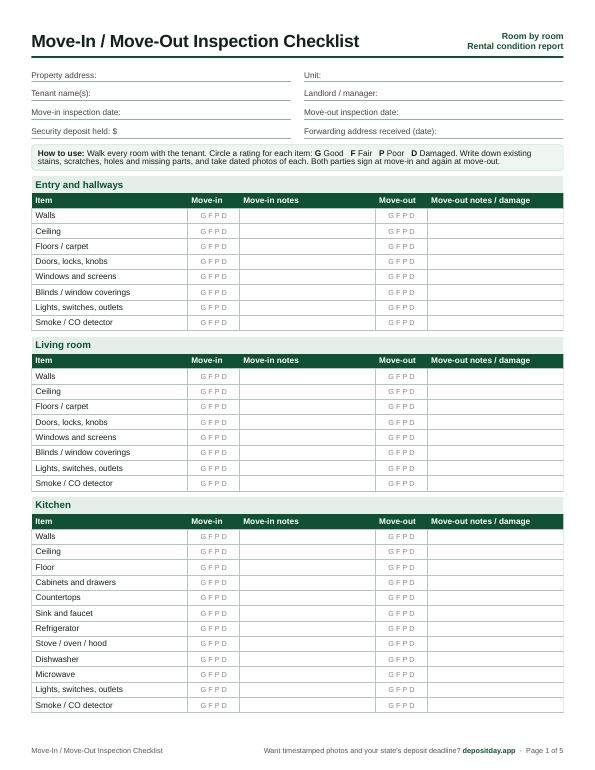
Room-by-room condition report: 12 rooms, 99 items, move-in and move-out columns, signature lines, and tips that win deposit disputes. Fill it in at move-in so the move-out comparison is easy. PDF, 5 pages, no sign-up.
Download the free PDF
Before anyone deducts
Every state sets a deadline for returning the deposit or sending an itemized list of deductions, from 14 to 60 days. Missing it can cost the landlord the right to keep anything. Look up your state. Landlords: use the free deduction letter template. Renters: see how to get your deposit back.
DepositDay walks you through move-in and move-out room by room, burns the date and time into every photo, shows what changed side by side, counts down your state's deadline, and writes the itemized deduction letter.
Start a free inspection
Common questions
Is a tenant responsible for water damage?
Only for water damage the tenant caused or made worse, such as an overflow, a leak from something the tenant installed, or a leak they saw and didn't report. Leaks from the roof, old plumbing, failed appliances or storms are usually the landlord's.
Can a landlord charge me for a leak I reported?
Generally not for the leak itself or the damage it caused after you reported it, unless you caused the leak. Reporting in writing with a date is what protects you.
Can a landlord charge for a water stain on the ceiling?
Only if the tenant caused the water that made it, like an upstairs tub overflow in a unit they rented. A stain from a roof or pipe leak, or one shown in move-in photos, is not the tenant's cost.
Who pays for water damage to the apartment below?
It depends on the cause and on insurance. If the tenant caused it, the landlord's insurer or the downstairs neighbor may look to the tenant or the tenant's renters insurance. If a building pipe failed, it's usually the landlord's.
More deposit guides
General information, not legal advice. State and local rules differ and change. Read your state statute or ask a local attorney before you act. Deposit rules by state.
© 2026 DepositDay · App · Free checklist · Pinterest · About · Contact · Privacy