Wear and tear vs. damage › Can a Landlord Charge for Floor Scratches
Can a Landlord Charge for Floor Scratches?
Hard floors: wear vs. damage
Generally can't be charged
Wear and tear Fine surface scratches, a dull or worn finish in hallways and in front of the sink, minor scuffs, light fading near windows, and anything the move-in report shows was already there.
Generally can be charged
Damage Deep gouges or long scrapes from dragging furniture, dents and chips, pet scratches that cut through the finish into the wood, warped or swollen boards from spills or overflows the tenant caused, burns, and stains that soaked in.
It depends on the type of floor
Solid hardwood
Surface scratches in the finish can often be buffed and recoated. Deeper damage may need sanding and refinishing, but often only in the damaged room or area, not the whole home.
Engineered hardwood
The real-wood top layer is thin and can only be sanded a limited number of times, sometimes not at all. Deep damage may mean replacing boards, which is a more expensive repair.
Laminate and vinyl plank
These can't be refinished. Damaged planks are usually swapped out one by one, which is fair if matching planks are available. Replacing a whole room because of a few planks is harder to justify.
What a fair floor charge looks like
Charge for the smallest repair that fixes the damage: touch-up kits or filler for small dents, buff-and-recoat for finish scratches, refinishing or plank replacement only where the damage goes deeper. Floors and finishes wear out on their own, so a finish that was already due for a recoat supports a smaller charge. Run the numbers with the depreciation calculator, and compare with how carpet charges work.
Pets and floors
Pet claw marks that only scuff the finish are close to normal wear. Scratches cut into the wood, urine stains that blackened boards, and chewed thresholds are generally damage, even when the lease allowed the pet. A pet deposit, if any, is usually applied first (pet damage charges).
Proving it
Scratches are hard to see in photos. Take move-in and move-out photos low to the floor, with light coming across it from a window or flashlight, so scratches and dents show. Photograph each room in the same spots both times, note the floor type and the date it was installed or last refinished, and keep receipts or written estimates for the repair.
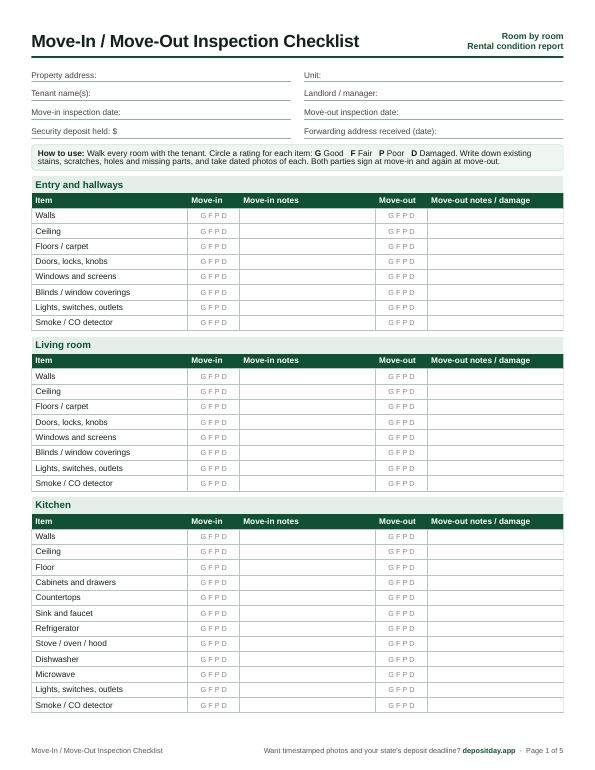
Room-by-room condition report: 12 rooms, 99 items, move-in and move-out columns, signature lines, and tips that win deposit disputes. Fill it in at move-in so the move-out comparison is easy. PDF, 5 pages, no sign-up.
Download the free PDF
Before anyone deducts
Every state sets a deadline for returning the deposit or sending an itemized list of deductions, from 14 to 60 days. Missing it can cost the landlord the right to keep anything. Look up your state. Landlords: use the free deduction letter template. Renters: see how to get your deposit back.
DepositDay walks you through move-in and move-out room by room, burns the date and time into every photo, shows what changed side by side, counts down your state's deadline, and writes the itemized deduction letter.
Start a free inspection
Common questions
Are scratches on hardwood floors normal wear and tear?
Light surface scratches and a worn finish in walkways usually are. Deep gouges, dents, pet scratches into the wood and water damage the tenant caused are generally treated as damage.
Can a landlord charge to refinish hardwood floors?
Only for damage beyond normal wear, and usually only for the area that needs it. A finish that was already old supports a smaller charge, since floors need refinishing over time anyway.
Can a landlord charge for scratches on vinyl plank or laminate floors?
Yes, for damage like gouges, chips or water-swollen planks. Since these floors can't be refinished, the usual fair charge is replacing the damaged planks, not the whole floor.
Do furniture pads matter for my deposit?
They help. Dents and long scrapes from dragging furniture are a common floor charge. Pads under chair and table legs and lifting furniture instead of sliding it prevent most of it.
More deposit guides
General information, not legal advice. State and local rules differ and change. Read your state statute or ask a local attorney before you act. Deposit rules by state.
© 2026 DepositDay · App · Free checklist · Pinterest · About · Contact · Privacy