Wear and tear vs. damage › Can a Landlord Charge for Carpet Replacement
Can a Landlord Charge for Carpet Replacement?
Wear and tear vs. damage on carpet
Generally can't be charged
Wear and tear Matting and flattening in walkways, light fading from sun, seams loosening with age, general wear from years of normal use.
Generally can be charged
Damage Permanent stains, burns, rips or holes, pet urine or odor that soaked into the pad, areas chewed or torn by pets, damage from water the tenant caused.
Why the carpet's age matters
Carpet has a limited useful life, often treated as roughly 5 to 10 years depending on quality. When a tenant ruins carpet that was already partway through that life, many courts only allow the value that was left, not the full replacement cost.
Example: carpet that cost $2,000 and was expected to last 8 years is ruined by pet urine after 6 years. Two years of life were left, so a common way to figure the charge is $2,000 × 2 ÷ 8 = $500, not $2,000. Carpet past its useful life usually supports little or no charge for replacement, though cleaning or removal costs may still apply.
What makes a carpet charge hold up
A signed move-in report and dated photos showing the carpet was clean and undamaged. The install or purchase date. Move-out photos of the specific stain or damage. A receipt or written estimate, and a line on the itemized statement that names the room and the problem. Try cleaning or patching before replacing; a charge for replacement when cleaning would have worked is easy to challenge.
Hardwood, laminate or vinyl plank instead? See floor scratch charges.
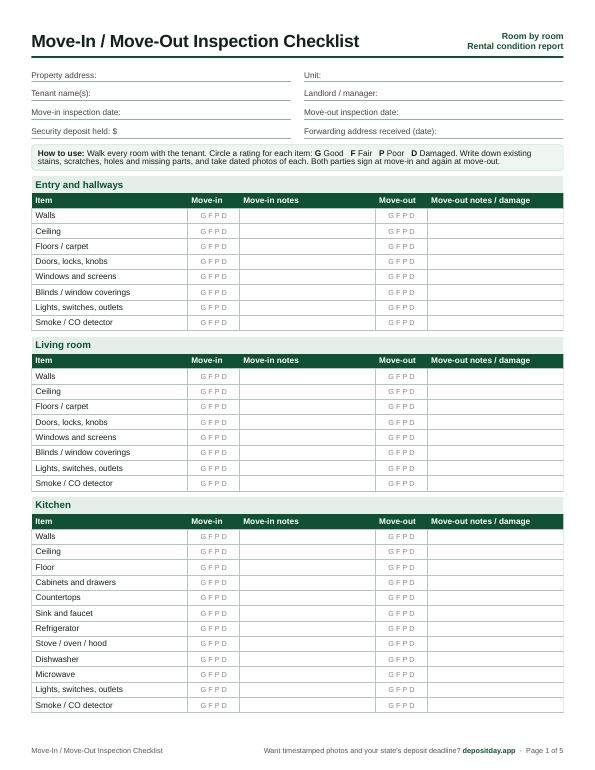
Room-by-room condition report: 12 rooms, 99 items, move-in and move-out columns, signature lines, and tips that win deposit disputes. Fill it in at move-in so the move-out comparison is easy. PDF, 5 pages, no sign-up.
Download the free PDF
Before anyone deducts
Every state sets a deadline for returning the deposit or sending an itemized list of deductions, from 14 to 60 days. Missing it can cost the landlord the right to keep anything. Look up your state. Landlords: use the free deduction letter template. Renters: see how to get your deposit back.
DepositDay walks you through move-in and move-out room by room, burns the date and time into every photo, shows what changed side by side, counts down your state's deadline, and writes the itemized deduction letter.
Start a free inspection
Common questions
Can a landlord charge for carpet cleaning?
A landlord can usually charge for cleaning that goes beyond normal turnover, such as removing stains, pet odor or heavy soil. Some states and some leases limit routine carpet cleaning charges, so check your state's rules and the lease.
How long is carpet supposed to last in a rental?
There is no single legal number, but carpet is commonly treated as lasting about 5 to 10 years depending on its quality. The older the carpet, the less a tenant can be charged for replacing it.
Can a landlord charge for the whole room's carpet because of one stain?
Often only if the damaged area can't be cleaned or patched and the carpet can't be matched. Even then, the charge is usually limited by the carpet's age.
Is pet damage to carpet wear and tear?
No. Urine stains, odor, chewing and scratching by pets are generally treated as damage, even when the lease allowed the pet. A pet deposit, if any, is usually applied first.
More deposit guides
General information, not legal advice. State and local rules differ and change. Read your state statute or ask a local attorney before you act. Deposit rules by state.
© 2026 DepositDay · App · Free checklist · Pinterest · About · Contact · Privacy