Who usually pays
Usually the landlord
Age, weather or crime Foggy or failed double-pane seals, cracked glazing putty, rotted wood frames, broken sash cords or balances that wore out, latches worn loose, screens that faded, sagged or tore at old seams, glass broken by hail, wind or a fallen branch, and glass broken in a break-in the tenant reported to the landlord (and to the police, if the lease asks for that).
Often the tenant
Tenant-caused Glass broken by the tenant, a guest, children or a pet, screens clawed or pushed out by a pet, screens removed and lost, a window forced open or shut hard enough to crack the frame, paint or stickers that ruined the glass or track, holes drilled through the frame for an AC unit or cable without permission, and a lock broken when the tenant got locked out.
The rule behind it
In most states, a landlord can deduct the cost to repair damage beyond normal wear and tear. California's statute is a typical example: the deposit may be used for "the repair of damages to the premises, exclusive of ordinary wear and tear, caused by the tenant or by a guest" of the tenant (Cal. Civ. Code § 1950.5(b)(2)). A window doesn't fail from ordinary use the way paint fades. If the glass is broken, the question is almost always who or what broke it. See wear and tear vs. damage for the general test.
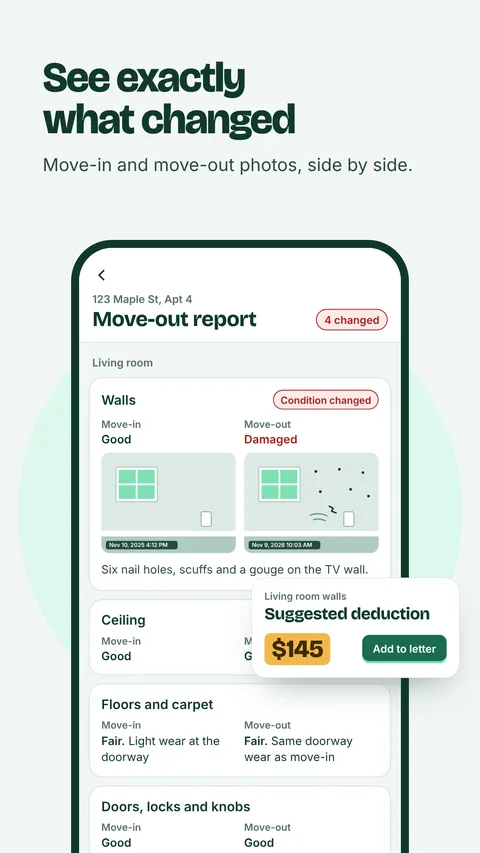
What a fair charge looks like
The charge is the reasonable cost of the repair, not an upgrade. A cracked single pane gets replaced with a matching pane, not a new energy-efficient window. A torn screen usually gets rescreened, which costs far less than a new frame. If the landlord does the work, the itemized list should describe it and the labor at a reasonable rate. Itemize each window separately on the deduction letter: "Bedroom 2, lower pane cracked, replaced glass, $185, invoice attached." In California, for deductions over $125 the landlord generally must attach receipts or invoices, and the landlord must now take photos of the unit at move-out before repairs, with move-in photos also required for tenancies that started on or after July 1, 2025 (Cal. Civ. Code § 1950.5(g)-(h)).
Screens and blinds
Screens are the most common window charge, and most of them come down to pets. A screen with a pet-sized hole at the bottom is damage. A screen with a long split along an old, brittle seam is usually wear. Window coverings follow similar rules: see charges for blinds. Pet-caused damage more broadly is covered under pet damage charges.
Report it when it happens
Renters: if a window breaks during the tenancy, tell the landlord in writing the same day, with a photo and what happened. A broken window can be a security and habitability problem, so landlords generally need to fix it promptly whoever caused it, and then sort out the cost. If someone else broke it, like a storm or a burglar, a written report and a police report make that clear. Landlords: keep the repair invoice and the tenant's report together for the move-out file.
Proving it either way
At move-in, photograph every window up close: glass, corners, seals, locks, tracks and screens. Small cracks in a corner and existing screen tears are easy to miss and impossible to date later without a photo. Open and close each one and note any that stick. At move-out, take the same shots. The renter move-in checklist and pre-move-out inspection guide show what to capture.
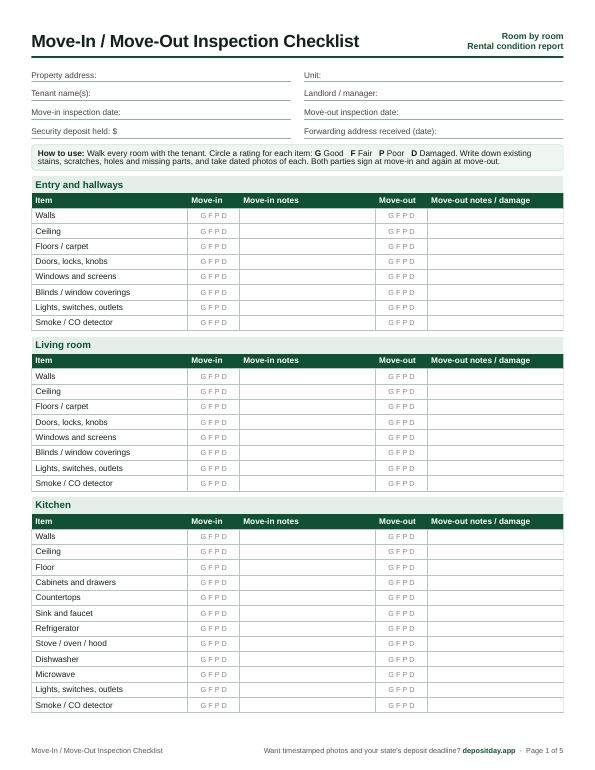
Room-by-room condition report: 12 rooms, 99 items, move-in and move-out columns, signature lines, and tips that win deposit disputes. Fill it in at move-in so the move-out comparison is easy. PDF, 5 pages, no sign-up.
Download the free PDF
Before anyone deducts
Every state sets a deadline for returning the deposit or sending an itemized list of deductions, from 14 to 60 days. Missing it can cost the landlord the right to keep anything. Look up your state. Landlords: use the free deduction letter template. Renters: see how to get your deposit back.
DepositDay walks you through move-in and move-out room by room, burns the date and time into every photo, shows what changed side by side, counts down your state's deadline, and writes the itemized deduction letter.
Start a free inspection
Common questions
Is a tenant responsible for a broken window?
If the tenant, a guest, a child or a pet broke it, generally yes, for the reasonable cost to repair it. If it broke from age, weather, a building defect, or a break-in the tenant reported, it's usually the landlord's cost.
Can a landlord charge for torn window screens?
For screens torn by a pet or the tenant, or screens removed and lost, usually yes. Screens that sagged, faded or split at old seams are normal wear.
Can a landlord charge for foggy double-pane windows?
Usually not. Fogging between the panes means the seal has failed with age, which is normal wear, not tenant damage.
How much can a landlord charge to fix a broken window?
The reasonable cost to repair it with matching material, listed on an itemized statement. Not an upgrade to a better window. Some states, like California, require receipts or invoices for larger deductions.
Who pays if a burglar broke the window?
Usually the landlord, as long as the tenant didn't cause it and reported it. A police report and a written notice to the landlord with the date help show it wasn't the tenant.
Related guides
General information, not legal advice. State and local rules differ and change. Read your state statute or ask a local attorney before you act. Deposit rules by state.